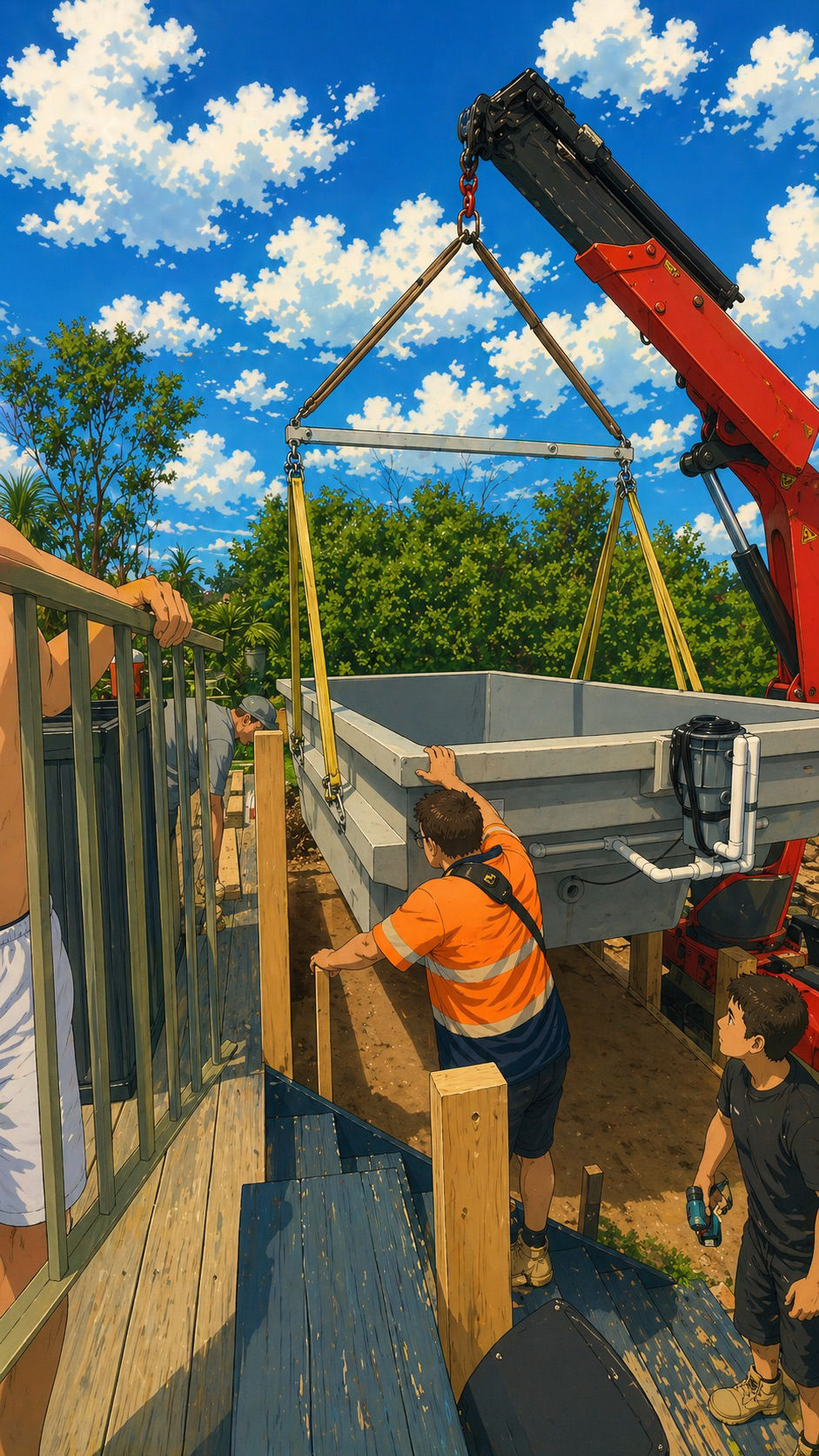
Magic Glasses: Parking on the Footpath
At first glance, parking a Hiab across a footpath can look like a small shortcut for a quick lift. Put on the Magic Glasses, and the picture changes fast. What looks convenient for the lift can become a public exposure risk, especially when children are cycling to school, and the footpath is part of their normal safe route.
Quick Scene-Setter
It is 8:30 am.
A Hiab arrives for a one-off lift and parks across the footpath to get better reach.
The load still needs to be handled, the truck needs to be stabilised, and the work crew is focused on completing the job.
To someone standing nearby, it can look manageable. The truck is in position. The lift can start. The footpath is only blocked for a short time.
But it is school-run time. Kids are riding bikes past the site. The footpath is now blocked, and the easiest way around is out onto a busy road.

What Most People See
Most people see a practical site decision.
The truck needs to get close enough to do the lift.
The footpath is only blocked for a short period.
The crew is there, so it feels controlled.
It is only one lift, so formal traffic management can seem unnecessary.
That first-look view focuses solely on the lifting task.
It does not properly account for what the site has just done to the public.

What the Magic Glasses Show You
The real problem is not just where the Hiab is parked. The real problem is that the site has shifted the risk from the job to the public.
A blocked footpath at school time creates several hazards at once:
You force children onto the road when they should be separated from traffic.
You create a predictable public interface issue because cyclists and pedestrians will keep coming through the area.
You increase the chance of an exclusion zone failure because uninvolved people are now being pushed toward the lift setup.
You risk damaging public infrastructure that may not be designed for truck and stabiliser loads.
You expose a planning failure by the PCBU controlling the site.
You also expose a failure by the Hiab company if it accepts the setup and helps carry it out without proper controls.
This is why the issue is not only crane safety. It is site access, public interface, timing, and respect for shared infrastructure.
The timing matters. At 8:30 am, the site should expect children riding to school, parents walking, and heavier road movement. That is not an unexpected risk. It is a known condition that should have been considered before the truck arrived.
The shortcut usually comes from one of two assumptions:
“It is only for a few minutes.”
“We will keep an eye out.”
Neither of those is a real control.
If the job blocks a live public route, the site needs a proper plan for what to do with the public while the lift is underway. If the answer is that kids have to go around the truck and onto the road, the setup is wrong.
The Controls That Matter
Do not set up across a public footpath during school travel time unless the public risk has been properly managed.
Plan the lift before the truck arrives, with the public interface included in the job controls.
Ask one direct question before setup - where do pedestrians and cyclists go while this lift is happening?
If the answer is “onto the road” or “around the truck,” the controls are not good enough.
Use traffic management where public movement is affected.
Obtain corridor access or any required approvals where the work affects public access routes.
Change the timing if the lift clashes with school travel periods or other peak public use.
Change the truck position so the footpath remains open, even if that makes the lift less convenient.
Use physical barriers and active control where public traffic is high.
Establish Exclusion Zones
Stop the job if the public cannot be kept clear of the risk area.
Check that the support surface is suitable. Do not assume a footpath is adequate for truck loading or stabiliser pressure.
Make sure both the site PCBU and the Hiab crew challenge unsafe arrangements rather than normalising them.
Magic Glasses Checklist - Parking on the Footpath
Is the footpath a live public route at this time of day?
Who is likely to be using it right now?
If the footpath is blocked, where will cyclists and pedestrians go?
Is this forcing children toward live traffic?
Has the public interface been included in the lift planning?
Is traffic management required?
Has an exclusion zone been established?
Are approvals needed to affect the public corridor?
Is the footpath suitable for truck and stabiliser loads?
Have convenience and speed taken priority over public safety?
If a child appears beside the truck, do the controls still work?
A Hiab across a footpath can look like a small operational decision. When in the wrong place at the wrong time, it is a public risk decision.
The Magic Glasses help you see that the real hazard is not only the lift - it is the shortcut that pushes uninvolved people, especially children, into harm’s way.
You can learn to spot this early. The next step is simple: before any setup begins, ask where the public will go and whether that answer is acceptable.
Magic Glasses: The magic glasses come from the reality of - when I look at my books, I don't see a problem. But when my accountant looks at the books, it's a whole different story. He must have a special set of glasses.
As PCBU's, Officers and Workers, we have an obligation to learn what we are up to and the risks. Our actions and the standards we accept also affect those around us. This magic glasses post is made to help others see what we see.