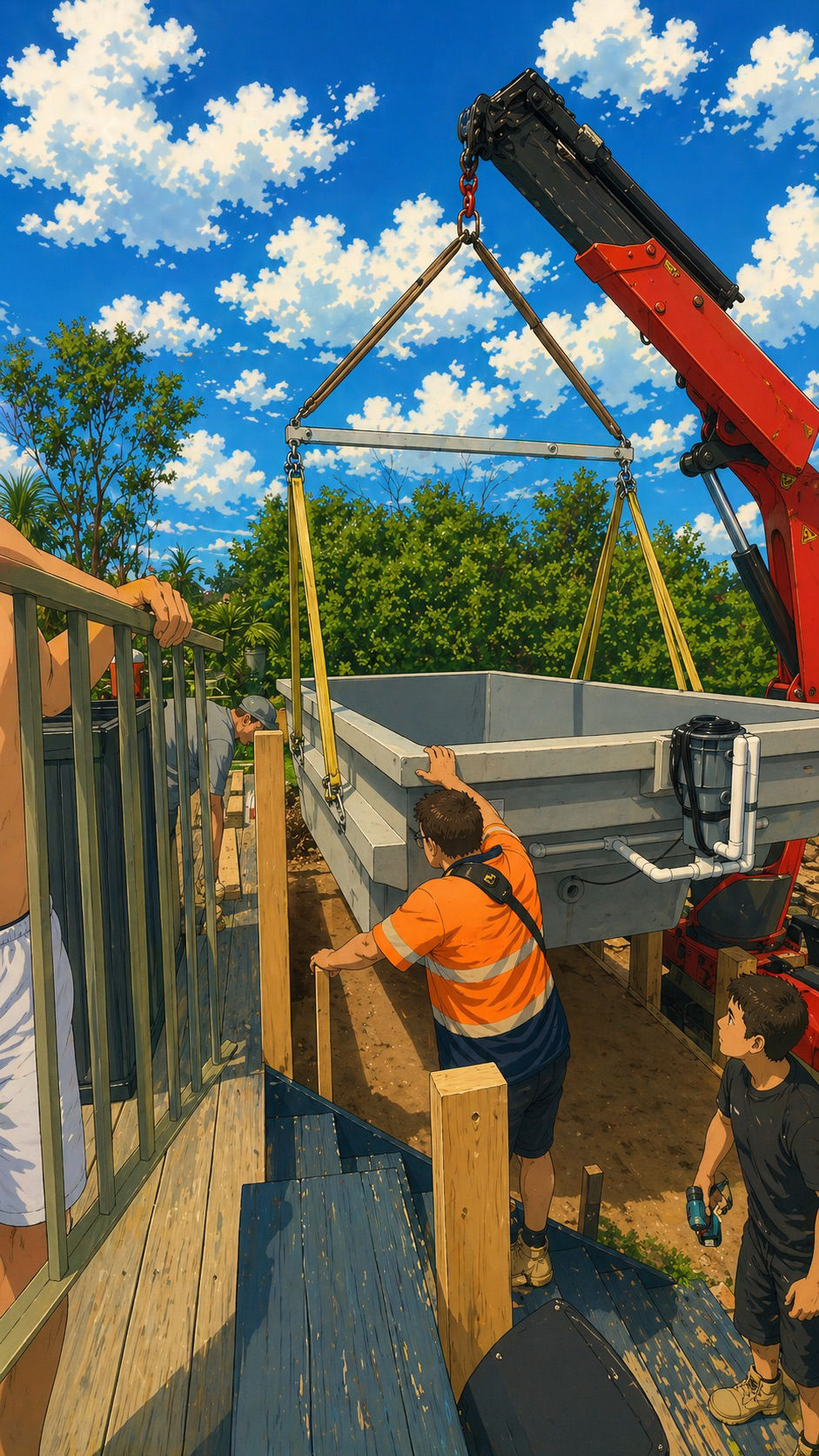
Magic Glasses: Pinned Outriggers (Mobile Cranes)
When you first look at a mobile crane set up on outriggers, everything can appear normal. With the Magic Glasses on, you look beyond “it is holding” and focus on what protects the crane when conditions change. Outrigger pinning is one of those details that only matters when something stops being routine.
Quick Scene-Setter
You walk past a mobile crane set up on site.
Outriggers are extended, pads are in place, and the crane is level.
The lift looks routine and is within chart.
Some outrigger beams are not pinned.
Nothing immediately looks wrong.

What Most People See
Outriggers fully deployed
Crane level and stable
Load within rated capacity
A modern crane with advanced stability systems
The common assumption is that once the outriggers are down and taking weight, pinning is optional.

What the Magic Glasses Show You
Many mobile cranes operate with variable outrigger positions. On cranes with systems such as Variobase, some outrigger lengths do not have a pinning hole. This is normal and by the manufacturer's design.
The important distinction is this:
No pin available – designed operating condition
Pin available but not fitted – missed control
A common misunderstanding is that outrigger pins are only an added safety feature. They are not.
Hydraulic outrigger cylinders are designed to extend and position the beams. They are not intended to provide positive mechanical restraint under abnormal conditions such as uplift, shock loading, or sudden load transfer. Anchor points may also not be designed to tolerate those loads.
There are documented cases where a crane has lifted onto one side, transferring weight unevenly. The loaded side holds. The unpinned beam retracts. The crane overturns.
Not pinning outriggers is like not wearing a life jacket. Most of the time, you do not need it. When you do need it, you really need it, and there is no time to put it on.
Pins exist to manage failure, not normal lifting.
Signs to look for:
Pinning holes aligned but pins not installed
Pins fitted on some beams but not all
Pins omitted because the lift is “light,” “quick,” or the crane is modern

The Controls That Matter
Confirm outrigger pinning requirements against the crane manufacturer’s instructions for the configuration in use
Understand when pinning is not possible by design
Identify when pinning is possible but omitted
Fit outrigger pins wherever the crane configuration allows
Confirm pins are fully engaged and secured before lifting
Treat pinning as a primary mechanical control, not an optional extra
If you can pin, you should.
Magic Glasses Checklist – Pinned Outriggers (Mobile Cranes)
Outrigger positions selected in line with the lift plan
Ground prepared with suitable pads or mats
Pinning holes checked on all outrigger beams
Pins installed wherever the configuration allows
Pins fully engaged and secured
Pins remain in place for the duration of crane operations
Pinned outriggers rarely attract attention when everything goes to plan.
Their value only becomes clear when something changes suddenly. Modern crane technology allows flexibility, but it does not replace mechanical restraint.
Some outrigger positions cannot be pinned, and that is by design. Where pinning is possible, it remains a critical safeguard.
Next time you walk past a crane, ask one question: Can this be pinned? If the answer is yes, make sure it is.
Magic Glasses: The magic glasses come from the reality of - when I look at my books, I don't see a problem. But when my accountant looks at the books, it's a whole different story. He must have a special set of glasses.
As PCBU's, Officers and Workers, we have an obligation to learn what we are up to and the risks. Our actions and the standards we accept also affect those around us. This magic glasses post is made to help others see what we see.