Magic Glasses - The Origin Story
Updated: May 3
Magic Glasses started as a simple idea.
Some people can look at a lift and see nothing wrong.
Others look at the same lift and immediately see problems.
That difference matters.

Where the idea comes from
The Magic Glasses idea comes from a simple reality:
When I look at my books, I do not see a problem.
When my accountant looks at the same books, it is a completely different story.
He sees issues I cannot see.
Not because the issues are hidden, but because he has the knowledge and experience to recognise them.
It is like he is wearing a special set of glasses.
Why that matters for safety
Safety works the same way.
If you do not know what good looks like, you cannot see what is wrong.
Over the last few weeks, this became very clear after a social media post went viral in our industry.
A contractor had their work publicly praised by a health and safety professional.
That praise was echoed by a Health and Safety Manager.
It gathered momentum quickly.
What the glasses revealed
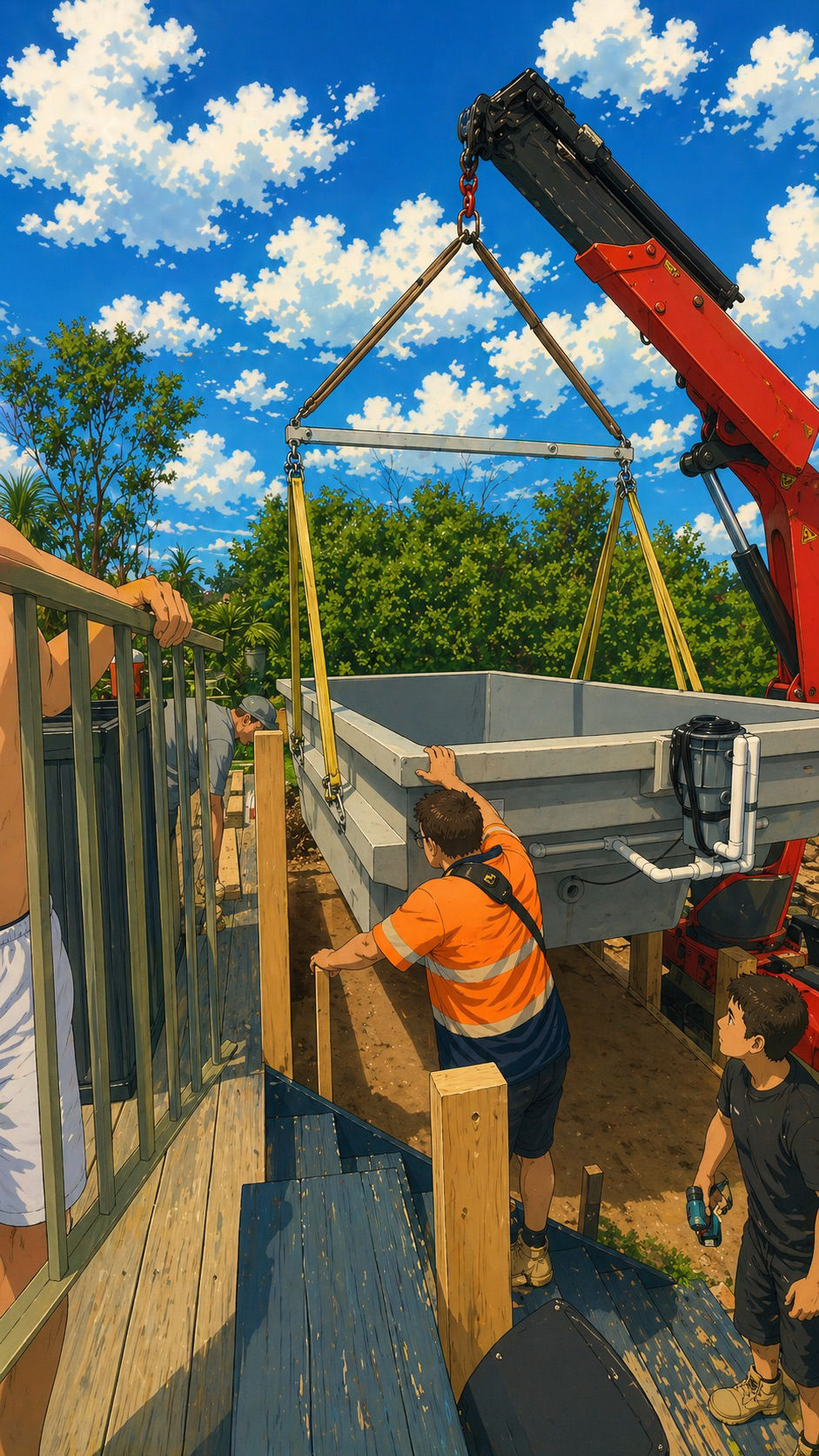
The imagery in the post was shocking.

It showed a lifting operation with multiple issues present at the same time:
Operator on the deck while the Hiab was being operated by remote
No hard hat
No outrigger pads
Slings that were clearly UV-damaged
Short leg on one side
No cones or exclusion zone
Overhead powerlines
It was unbelievable.
But the most concerning part was not the lift itself.
It was that no one could see the problems.
Not even people whose role is to teach and lead health and safety. It showed we have a disconnect between what is good and what is not so good.
What Magic Glasses really means
Magic Glasses is the ability to see risk that has been normalised.
It is the discipline to notice missing controls, even when a job looks familiar or accepted.
It is understanding that praise, likes, and reposts do not equal good practice.
If unsafe work is celebrated, it spreads.
And when it spreads, it becomes the new baseline.
Why do we talk about Magic Glasses at McLeod?
At McLeod, we use Magic Glasses as a teaching tool.
We want our people to see issues early, not after something goes wrong.
We want our customers to understand what good actually looks like.
And we want to be clear about how we operate.
We need to recalibrate.
We need to issue some glasses.
Because the industry will always feel pressure to go cheaper and faster.
But we will not compete by removing controls.
We will compete by seeing what others miss and doing the job properly.
Every time.
Scott McLeod