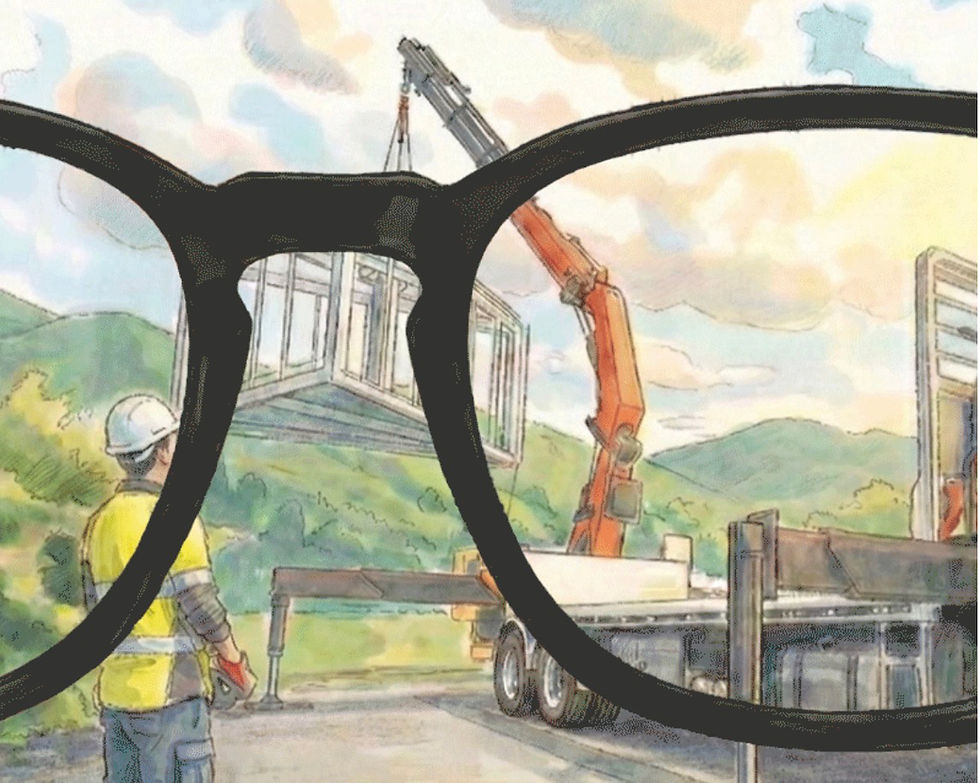
Magic Glasses: Soft Slings and Old Skool Habits
Some practices made sense years ago, before we fully understood how materials degrade and how small exposure adds up. When you put on the Magic Glasses, you stop seeing “the way it has always been done” and start seeing why some old skool habits quietly create risk.
Quick Scene-Setter

A Hiab truck arrives on site for a routine lift.
Soft, round slings are hanging over the truck headboard, ready to go.
They have been stored there for months, maybe years.
At first glance, it looks organised and efficient.
What Most People See
Most people see:
Slings are easy to access and always on hand.
No obvious cuts or broken stitching.
A setup that has worked plenty of times before.
The thinking is familiar:
This is how we have always stored them. It must be fine.
What the Magic Glasses Show You

With trained eyes, the picture changes.
Old skool storage habits
Hanging slings from the headboard dates back to a time when we did not fully understand long-term material degradation.
Convenience drove the decision, not risk reduction.
UV damage
Synthetic slings break down in sunlight.
Green slings fading to a dull grey-green is a visible warning sign.
Compare an old sling to a new one and the loss of colour and strength margin stands out clearly.
Unnecessary work at height
Retrieving slings from a headboard means climbing onto the truck deck.
This introduces a fall risk that adds no value to the lift.
The risk increases when the deck is wet, uneven, or partially loaded.
Weather exposure
Slings left outside are repeatedly soaked and dried.
Heat, moisture, and UV accelerate fibre degradation.
This shortens service life and increases the chance of failure during use.
Normalisation of wear
Because damage happens slowly, it becomes accepted.
Faded, stiff slings start to look “normal” instead of “past their best.”
None of these risks are obvious at first glance. All of them are predictable.
The Controls That Matter
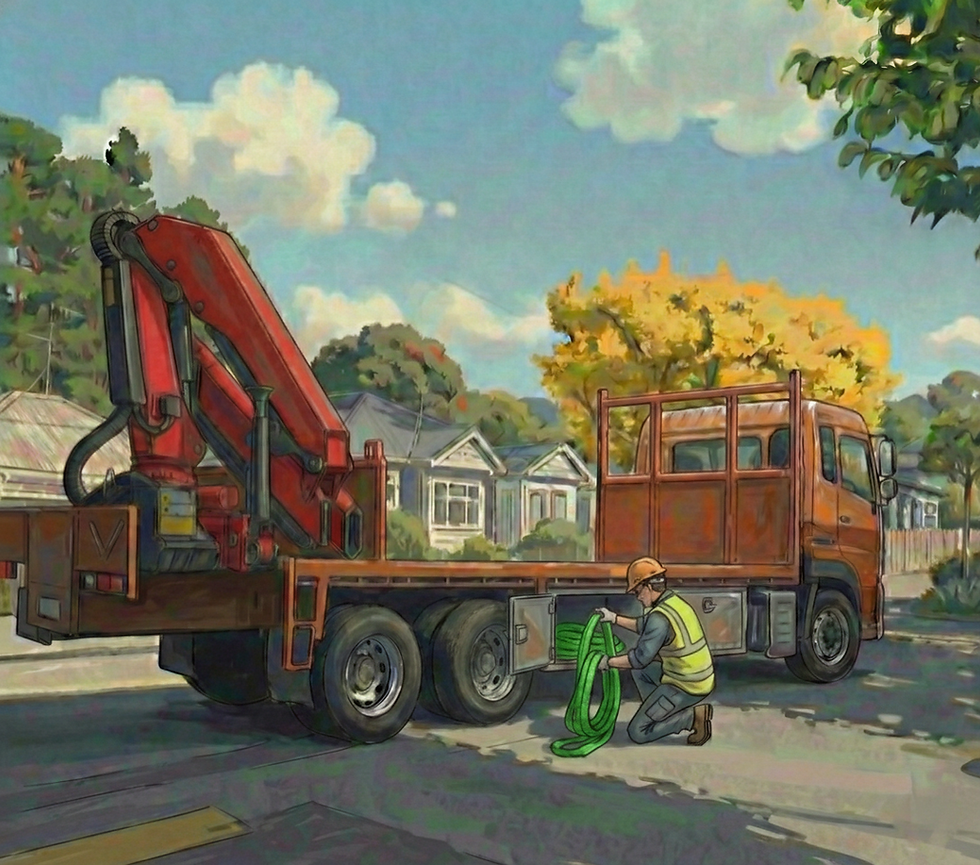
Practical steps that reduce risk immediately:
Store soft slings in a dedicated locker or bin, protected from sunlight and weather.
Fit Hiabs with proper sling storage if none exists.
Use longer slings or suitable accessories so rigging can be completed from ground level.
Avoid climbing onto the truck deck unless it is genuinely required.
Inspect slings for colour fading, stiffness, and surface wear, not just cuts or broken stitching.
Remove slings from external storage at the end of each job instead of leaving them exposed.
These controls eliminate both degradation and height risks in a single step.
Magic Glasses Checklist – Soft Slings and Storage
Are soft slings stored out of direct sunlight?
Do the slings look faded compared to new gear?
Is anyone climbing onto the truck just to access slings?
Can the rigging be done from ground level instead?
Are slings being repeatedly soaked and dried?
Is Sling storage treated as protection rather than convenience?
Hanging slings on the headboard is an old skool habit from a time when the risks were not fully understood.
Today, we know better. UV damage, weather exposure, and unnecessary work at height all add up.
Once you start seeing these issues, you cannot unsee them.
Put the slings away properly, stay off the truck deck where you can, and help others move past habits that no longer make sense.
Magic Glasses: The magic glasses come from the reality of - when I look at my books, I don't see a problem. But when my accountant looks at the books, it's a whole different story. He must have a special set of glasses.
As PCBU's, Officers and Workers, we have an obligation to learn what we are up to and the risks. Our actions and the standards we accept also affect those around us. This magic glasses post is made to help others see what we see.