

Magic Glasses: When It Feels Safe
At first glance, everything about a lift can feel controlled, even exciting. But when you put on the Magic Glasses, you stop judging the job by how it feels and start judging it by how it is controlled. The difference is not the lift - it is whether there is a system behind it.
Quick Scene-Setter
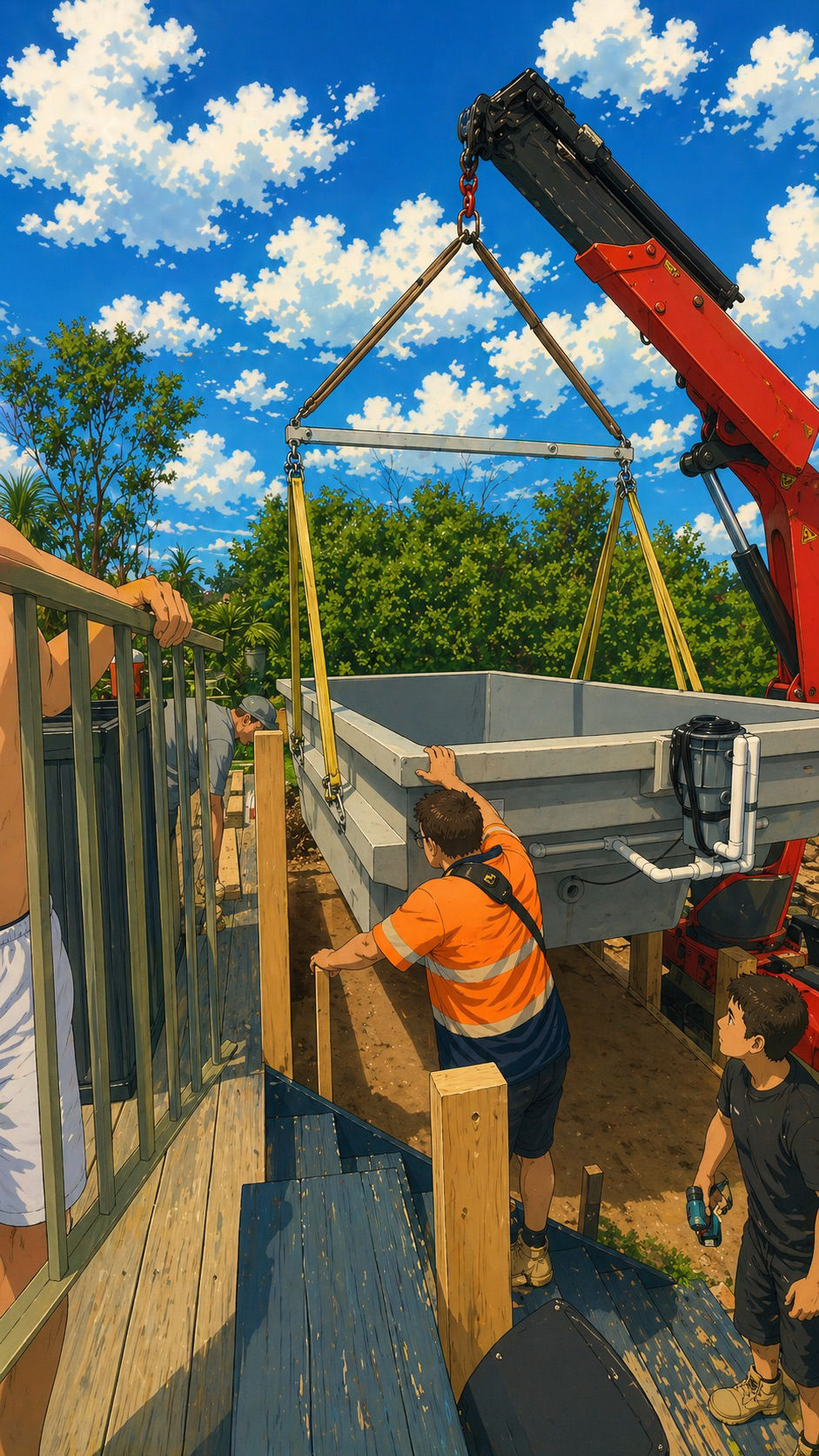
A Hiab is lifting a new pool into place.
Workers are positioned around the pool, reaching in to guide the pool as it comes down.
The operator is on the remote, one hand on the controls and one hand steadying the load.
The owners are nearby, watching from deck chairs.
The atmosphere is positive. The job looks under control.
What Most People See
Most people notice:
A careful placement
A team working together
A short, controlled lift
Happy clients watching the job
The thinking is:
“This is going well. Everyone is involved. It is under control.”

What the Magic Glasses Show You
A trained eye sees the absence of structure.
1. There Is No Exclusion Zone
Workers are standing within reach of the load
The operator is inside the same working area
Observers are close to the lift
This means:
No defined boundary of where it is safe to stand
No control over who enters the risk area
No separation from a suspended load
2. People Are Reaching In to Guide the Load
Workers are placing their hands on the pool as it is lowered
The load is being controlled by proximity, not by method
This exposes them to:
Sudden load movement
Sling tension changes
Load shift if it catches or tilts
Pinch points/crush zones
A pool is large, rigid, and awkward. Once it moves unexpectedly, there is no safe way to “hold” it.
3. The Operator Is Compromised
One hand on the controls
One hand on the load
This reduces:
Full control of the crane
Ability to respond quickly
Focus on the lift and the people
Visibility of the system (Hiab, load, people, hazards)
The operator should be fully dedicated to operating the crane.
4. The Environment Is Driving Behaviour
Clients are watching
The moment is seen as a milestone
The team wants to place it cleanly
This leads to:
People are getting closer than they should
Informal handling of the load
Reduced discipline around controls
5. No Hard Hats Is the Signal
The lack of hard hats is not just PPE non-compliance.
It shows:
No defined work zone
No controlled entry to the lift area
No consistent safety standard applied
When basic PPE is missing during a lifting operation, it is a clear sign that the system is not in place.
Control measures such as PPE must be identified and applied as part of the lift planning process, not decided in the moment
Unfortunately, it gets worse
Can you see the problem?
Here is a clue. Look at the rigging. This is a serious problem.
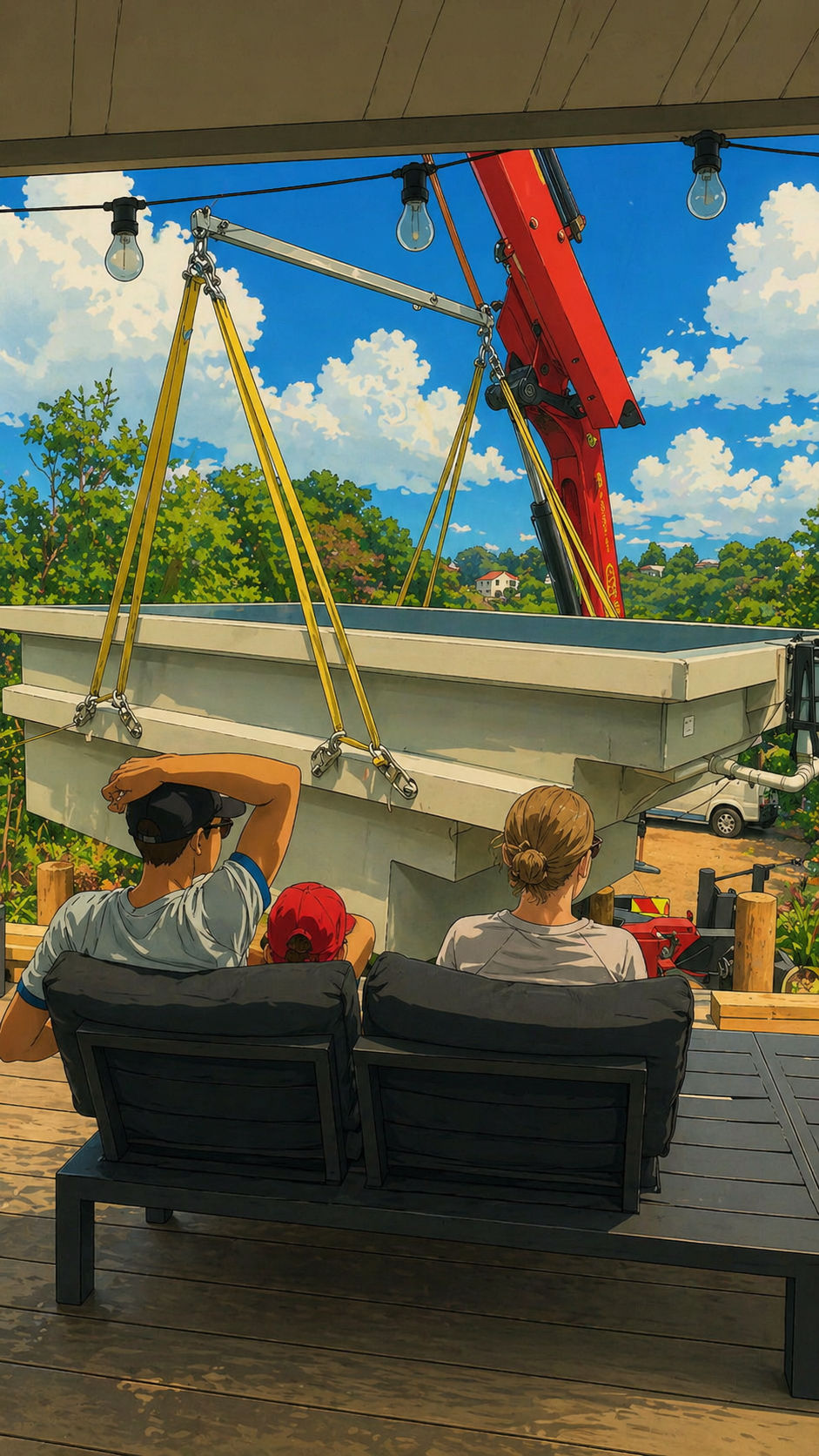
Shackles and soft slings don't equalise loads in this configuration. In fact, there is a significant risk of failure here.

For the trained eye, there are two major issues with the rigging:
The load is rigged across two swift lifts. This type of attachment requires load equalisation. We should be seeing wires and rolling blocks. The rigging here does not share the load evenly.
The two points tied together in this approach do not equalise the load. The soft slings have been opened up, reducing capacity, and the shackles are now trying to hold a sling that can move - if it does move, there is a high chance of failure.
This rigging combined with the Hard Hats and hands on load with owners a family - effectively in the exclusion zone is as dangerous as it gets.
The Controls That Matter
This job needs structure, not adjustment.
Establish a clear Exclusion Zone around the lift
Keep all non-essential people, including observers, outside the zone
Use tag lines or positioning methods that keep people clear
Ensure the operator is fully focused on the system (Crane, Truck Stability, Load, Hazards, People)
Define PPE requirements before the lift starts
Require hard hats for anyone inside the exclusion zone
Stop the lift if these controls are not in place
For PCBUs and site control:
Ensure a Safe System of Work exists for lifting
Communicate and enforce that system
Monitor and intervene when standards are not met
A PCBU must ensure workers are not exposed to health and safety risks and must minimise those risks so far as reasonably practicable
Magic Glasses Checklist - Pool Placement
Is there a defined Exclusion Zone?
Are people standing within reach of the load?
Is anyone touching or trying to guide the load by hand?
Is the operator fully focused on the system?
Are non-essential people nearby?
Is PPE clearly defined and enforced?
Is everyone inside the zone wearing a hard hat?
If these are missing, the system is missing.
This lift feels safe because nothing has gone wrong.
That is not the same as being safe.
No exclusion zone.
Hands on the load.
No hard hats.
These are clear signs that the job is not being controlled.
You can learn to see this early.
Set the standard before the lift starts.
Magic Glasses: The magic glasses come from the reality of - when I look at my books, I don't see a problem. But when my accountant looks at the books, it's a whole different story. He must have a special set of glasses.
As PCBU's, Officers and Workers, we have an obligation to learn what we are up to and the risks. Our actions and the standards we accept also affect those around us. This magic glasses post is made to help others see what we see.


