

Magic Glasses: If It Is Not In Chart, It Is Not A Lift
At first glance, it can look like a clever workaround. A machine gives the truck a bit more downforce, the crane starts to move the load, and the job appears to be back on track. But the Magic Glasses show something different - once a lift depends on a workaround outside the rated chart, you are no longer looking at a controlled crane lift. You are looking at a plan that has already failed.
Quick Scene-Setter
A HIAB arrives to lift a load from a tight position. The operator reaches out, takes the weight, and the crane will not safely do the job at that radius.
Someone suggests using a digger bucket to push down on the truck deck to help stabilise it and force the lift through.
To an inexperienced eye, it can look practical. The excavator is there. The load only needs to move a short distance. Everyone wants the job done.
What Most People See

Most people see a machine helping another machine.
They think:
the truck just needs a bit more weight on it
the load is nearly up anyway
the digger is only assisting for a moment
if it works, the problem is solved
This is how bad lifting decisions often start. The focus shifts from whether the lift is within the crane’s design limits to whether the crew can somehow make it happen.
What the Magic Glasses Show You
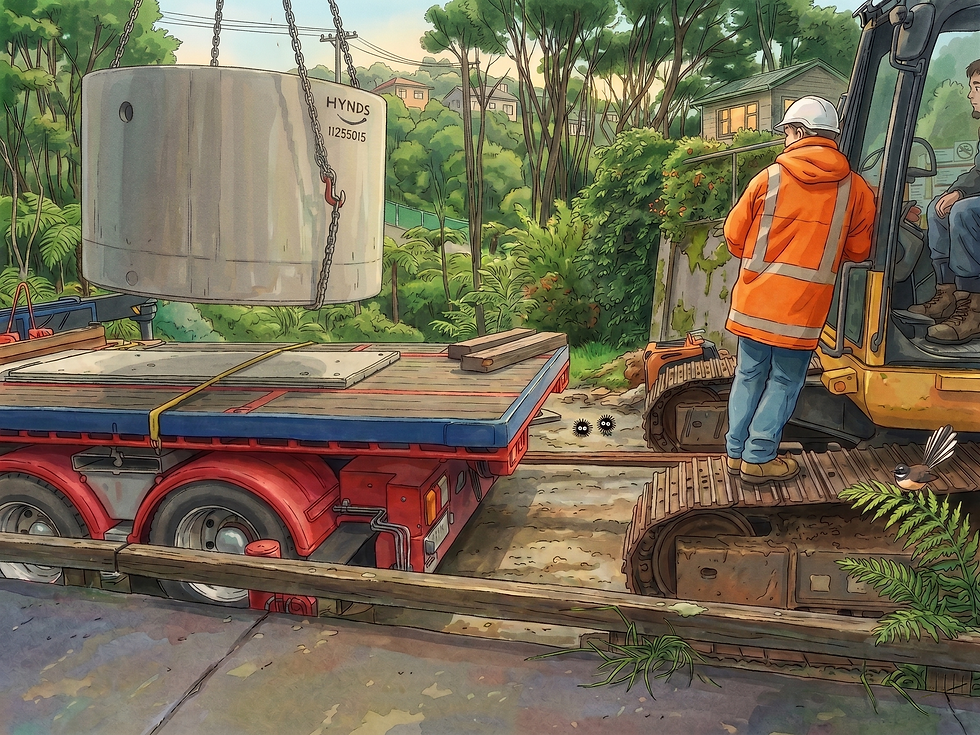
The Magic Glasses show that a HIAB is designed to operate within its rated capacity chart, in a known configuration, under known conditions. The chart is the basis for the lift. Once the lift depends on a digger bucket pushing down on the deck, you are outside that basis.
That changes everything.
The hidden problem is not just “extra force.” The hidden problem is that there is no rated chart for that setup.
A trained person sees several warning signs immediately:
the crane cannot lift the load within its normal configuration
another machine is being used to create artificial stability or downforce
the lift now depends on coordination between two machines that were not designed to function as one lifting system
the actual forces on the truck, chassis, stabilisers, crane structure, and ground are no longer known from the crane chart
the method cannot be validated by saying “it only needs a little help”
This matters because crane charts define the safe operating envelope. The Approved Code of Practice for Cranes includes approved crane rating charts as required documentation, and the Crane Safety Manual defines crane rating charts as the charts showing the maximum weight a crane can safely lift at a given radius, boom length, angle, or configuration.
Once you are outside the chart, you are outside the known limit of the crane.
That is the point the Magic Glasses pick up.
The issue is not whether the load moves. The issue is whether the lift remains inside a proven, controlled, and understood system.
If it does not, then the job has changed from a crane lift into improvisation.
The Controls That Matter
Stop the lift the moment it becomes clear the load is not within the chart.
Confirm the actual load weight, lift radius, boom configuration, and crane setup.
Check the rated capacity chart for that exact crane and configuration.
Do not use another machine to push down on the truck, restrain the chassis, or otherwise “help” the crane create capacity.
Re-plan the task using a method that stays inside the crane’s designed operating limits.
Reduce the radius if the site allows it.
Break the load down if practical.
Select a larger HIAB or a different crane if the required capacity is not available.
Treat any suggestion of “just helping it a bit” as a red flag that the current lift plan is not adequate.
Make sure the dogman, operator, and site supervisor are aligned so that no one improvises outside the chart.
Magic Glasses Checklist - If It Is Not In Chart
Do we know the real load weight?
Do we know the actual working radius?
Are we reading the correct chart for this crane and configuration?
Is the crane able to do the lift without outside assistance?
Has anyone suggested pushing down, holding, or forcing the crane into the lift?
Are we relying on another machine to make the lift possible?
Are the forces still known and controlled?
Has the lift plan changed from “within the chart” to “make it work”?
If this method is not in the chart, manual, or engineered plan, why are we treating it as acceptable?
The lesson is simple. A crane does not gain a safe lifting capacity because another machine pushes down on it. If the lift is not within the rated chart, it is not a valid lift with that setup. Trained people learn to spot that moment early, stop the job, and change the plan before improvisation turns into an incident.
No chart, no lift. That is one of the clearest pairs of Magic Glasses you can put on a crane job.
Magic Glasses: The magic glasses come from the reality of - when I look at my books, I don't see a problem. But when my accountant looks at the books, it's a whole different story. He must have a special set of glasses.
As PCBU's, Officers and Workers, we have an obligation to learn what we are up to and the risks. Our actions and the standards we accept also affect those around us. This magic glasses post is made to help others see what we see.


