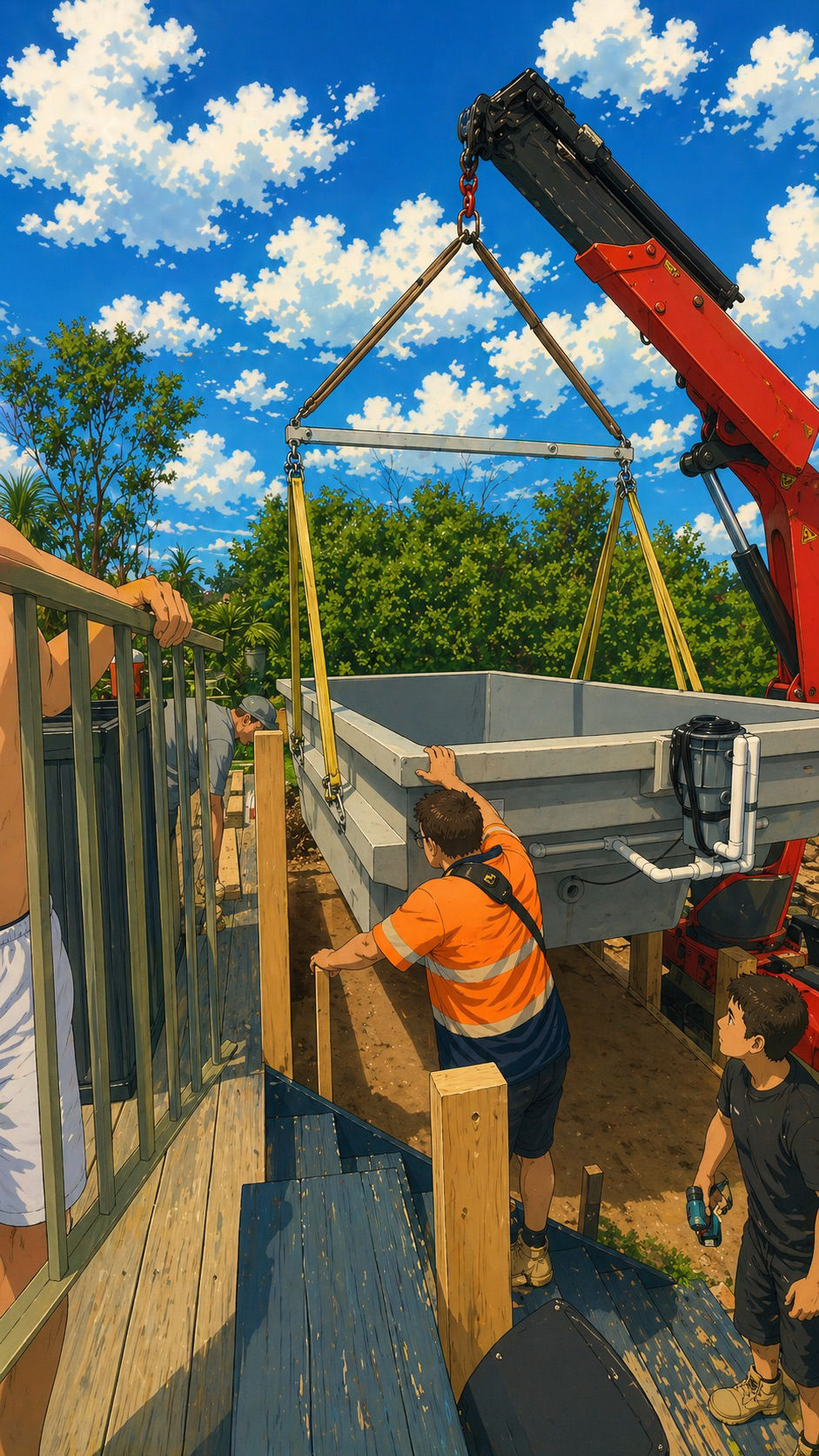
Project Managers and Safe Crane Lift Guidance
Creating a Safe Site for Crane and Lifting Operations
Lifting operations are common on construction and infrastructure projects, but they also present significant risk. Cranes and lifting devices can move heavy loads through complex environments, often in close proximity to workers, structures, and public areas.
Many lifting incidents occur not because of technical crane failures, but because the lifting task or the site conditions were not properly considered.
This guidance provides practical direction for Project Managers responsible for worksites where lifting operations occur. It helps Project Managers understand their role in ensuring that lifting activities are conducted safely, regardless of crane type.
The principles apply to all lifting operations, including:
• Mobile cranes
• Tower cranes
• Crawler cranes
• Truck loader cranes (Hiabs)
• Pick-and-carry cranes
• Hoists and mechanical lifting devices
While crane operators and lifting specialists manage the technical aspects of lifting, Project Managers play a key role in ensuring the worksite environment and task conditions allow for safe lifting operations.

The Project Manager’s Role in Lifting Operations
The Project Manager is responsible for ensuring that the worksite supports safe lifting activities.
Project Managers are not expected to design or engineer the lift. However, they must ensure that lifting operations are properly planned and that site conditions match the lift plan.
This includes confirming that:
the lifting task is clearly understood
competent lifting personnel are engaged
the lift plan reflects actual site conditions
lifting activities are coordinated with other work on-site
site hazards that could affect lifting operations are identified and managed
In many lifting incidents, the lift plan itself was technically correct, but the task conditions or site environment were not properly considered.
Key responsibilities of the Project Manager include:
Provide safe site conditions
Ensure ground conditions, underground service clearance, energy sources such as power, access routes, and working areas are suitable for crane operations.
Review lift plans
Confirm the lift plan reflects actual site conditions and the work being performed.
Manage site interfaces
Coordinate lifting activities with trades, deliveries, and other site operations.
Control access
Establish exclusion zones and manage pedestrian and vehicle movement.
Ensure communication
Confirm that lifting team roles are defined and communication systems are in place.
Support lifting supervision
Ensure competent supervision is present when required.
The Five Components of Any Lift
Every lifting operation involves five interacting elements.
Understanding these elements helps Project Managers review whether a lift can be carried out safely.
Component | Description | Typical Responsibility |
|---|---|---|
Task | The work activity being performed | Project Manager / Principal Contractor |
Load | The item or material being lifted | Builder, supplier, manufacturer |
Lifting Method | The rigging arrangement used to connect the load to the crane | Dogman/rigger |
Crane | The lifting equipment performing the lift | Crane provider/Crane Operator |
Site Environment | Ground conditions, underground services, energy sources, site layout, hazards, and surrounding activities | Project Manager |
A lifting operation becomes unsafe when any one of these elements is poorly understood or incorrectly controlled.
Project Managers usually have the greatest influence over two of these elements:
the task being performed
the site environment where the lift occurs
These factors strongly influence whether lifting can occur safely.
Understand the Task
Effective lift planning begins with understanding the full task the crane is supporting.
The task is not limited to the lift itself. It includes the activities that must take place before, during, and after the lift to ensure the work is completed safely. The crane should be treated as a tool being used to carry out the task.
Understanding the task helps determine:
the lifting method required
the crane and lifting equipment needed
the sequence of work
the people, plant, and equipment involved
the hazards, risks, and controls associated with the activity
the level of planning, coordination, and supervision required
Project Managers should confirm:
what work activity is the crane supporting
how the activity will be carried out, step by step
what must occur before the lift, during the lift, and after the lift
where the load is being lifted from and where it will be placed
whether the lift is a one-off activity or repeated multiple times
whether workers will need to guide, land, position, connect, or secure the load
what documents and controls are required for the task, such as a JSA, SWMS, permit, exclusion zone, or traffic management plan
Project Managers should also identify other hazards and site activities that may affect the lift, including:
movement of vehicles, mobile plant, including items like mobile elevated work platforms or equipment
pedestrians or workers in adjacent areas
other trades or activities operating nearby
restricted or congested work areas
overhead or underground services
changing ground, access, or site conditions
The task should be broken into clear steps so hazards can be identified and controls can be applied at each stage of the activity.
As task complexity increases, the level of lift planning, coordination, and supervision must also increase.
Confirm the Load
Once the task is understood, the next step is confirming the load.
Before lifting begins, the load weight must be known or verified.
Key questions include:
What is the weight of the load?
How was the weight determined or verified?
Where is the centre of gravity?
What lifting points will be used?
Will the load remain stable during lifting?
Common load-related risks include:
unstable pallets
uneven weight distribution
shifting or poorly secured materials
loads that may break apart during lifting
materials that may slide or separate
sharp edges that can cut or damage rigging
lift points not suitable for the load
Understanding the load weight and centre of gravity is essential for selecting the appropriate crane and rigging configuration.
Review the Lifting Method
The lifting method describes how the load is connected to the crane.
A lift plan should clearly identify:
lifting gear type
sling configuration
lifting points
load balance (centre of gravity)
rigging capacity
Rigging capacity must exceed the load weight and account for sling angles and load distribution.
Incorrect rigging is one of the most common causes of dropped loads.
The shape of the load and its centre of gravity largely determine the appropriate rigging arrangement.
Confirm the Crane is Suitable
The crane selected for the lift must be capable of safely lifting the load at the required radius and height.
When reviewing the lift plan, confirm:
crane type
crane capacity
working radius
boom configuration
counterweight configuration
lifting height
Crane capacity changes significantly as the working radius increases.
A crane capable of lifting a load close to the crane may not be able to lift the same load at a greater distance.
Check the Site Environment
Site conditions often determine whether a lift can be carried out safely.
Project Managers should confirm that the worksite environment supports the lifting operation.
Ground conditions
Confirm:
ground bearing capacity
soil stability
recently excavated or backfilled areas
proximity to trenches or underground services
use of outrigger pads or crane mats
Ground stability is critical to crane safety.
Site layout
Check for potential obstructions such as:
nearby structures
scaffolding
overhead services or power lines
restricted access areas
adjacent public spaces
The lifting path should be clear from the pick-up point to the placement location.
Exclusion zones
Confirm:
exclusion zones around the crane
drop zones beneath suspended loads
pedestrian controls
traffic management where required
No person should stand beneath a suspended load.
Weather conditions
Weather conditions can significantly affect lifting operations.
Risks include:
high wind
sudden gusts
reduced visibility
rain affecting ground stability
Large or lightweight loads are particularly sensitive to wind. See Crane Association Wind Speed Safety. Mancage work the limit is 7 m/s.
Practical Lift Review Method
Project Managers can quickly review lifting operations using five simple questions:
Is the lifting task clearly understood?
Is the load known and stable?
Is the lifting method appropriate?
Is the crane suitable for the lift?
Is the site environment safe for the operation?
If any of these questions cannot be clearly answered, the lift should be reviewed before work proceeds.

Common Causes of Lifting Incidents
Many lifting incidents occur due to predictable failure points.
Cause | Description |
|---|---|
Ground failure | Crane instability due to inadequate ground support |
Overloading | Crane capacity exceeded |
Incorrect rigging | Load poorly attached or unbalanced |
Wind effects | Load movement caused by wind forces |
Inexperience | Personnel unfamiliar with lifting risks |
Equipment failure | Mechanical or structural failure |
Dropped objects | Materials falling from loads |
Understanding these failure mechanisms helps Project Managers recognise unsafe lifting conditions early.
When a Lift Should Be Stopped
A lifting operation should be stopped if:
the lifting task is unclear
the load weight cannot be verified
rigging methods are uncertain
crane configuration differs from the lift plan
ground conditions appear unsafe
exclusion zones are not established
weather conditions exceed safe limits
communication between personnel is unclear
Stopping a lift when uncertainty exists is an important safety control.
Core Principle
A lifting operation is safe only when five elements are controlled at the same time:
The task is understood
The load is known and stable
The lifting method is correct
The crane is suitable
The site environment is controlled
Project Managers play a central role in ensuring that the task and the site environment allow for safe lifting operations.